
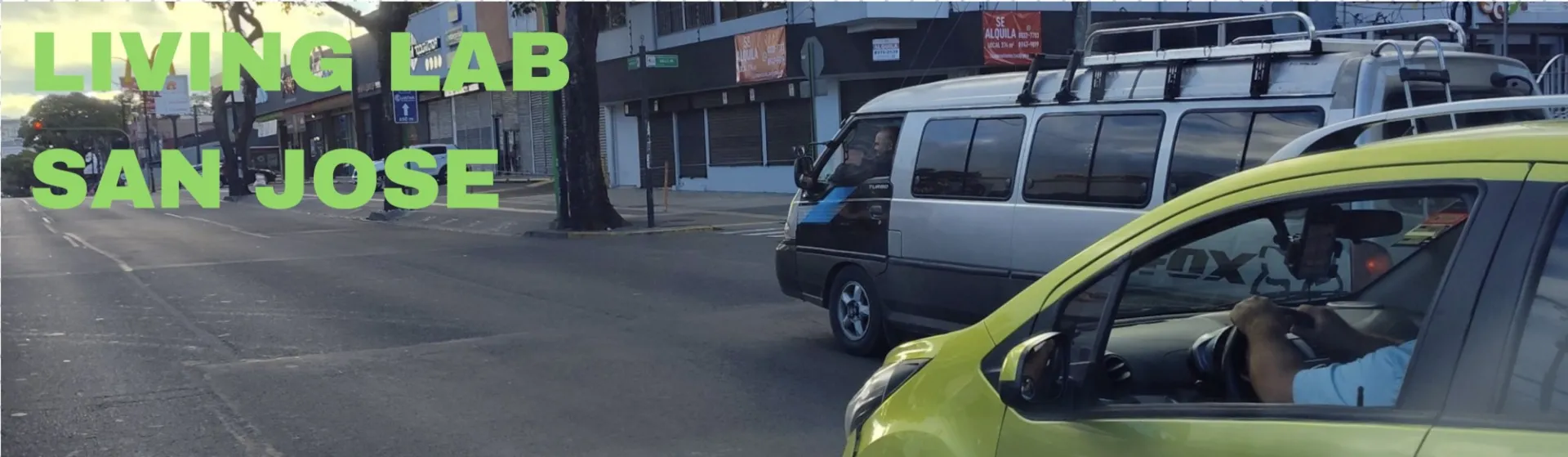
San José Living Lab aims to explore the inclusivity, operations, and impact of popular transport services in San José's densely populated area of Pavas through field research and community engagement, with findings to be disseminated locally and internationally via various educational and capacity-building platforms.
About San José Living Lab
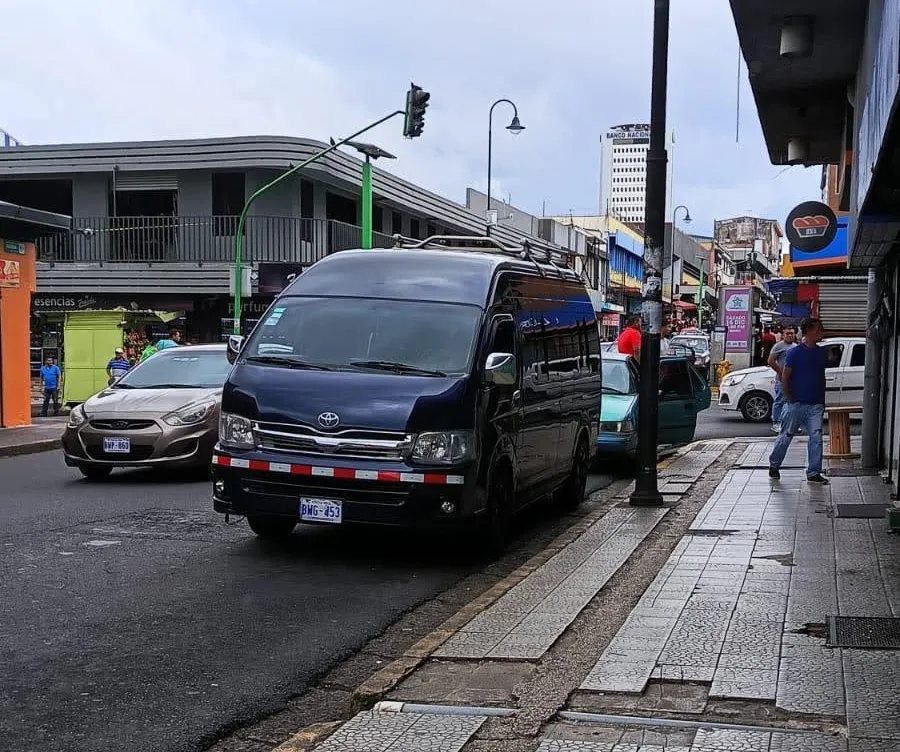
The case study will focus on the role of popular transport services operating in the Metropolitan Area of San José , Costa Rica, and providing services to one of the most densely populated areas of San José, Pavas. There is no research or data regarding popular transport services or how inclusive they are, how many vehicles operate locally, their reach, operations, impacts or role in the local economy. Through fieldwork, surveys, interviews and workshops with local residents, business owners, mini bus owners and drivers, this study aims to gain a better understanding on the contribution of these popular transport modes to enabling access to mobility services in the Metropolitan Area of San José.
The CPSU team will participate and present the results of the case study in national and international events, in addition to developing audiovisual materials to share learnings and insights from the project in a non-academic format. Finally, our team will include learnings in the Urban Sustainability Module we deliver for UPEACE, and coordinate with other local universities to deliver lectures, webinars and other capacity building events to transfer knowledge to students and younger generations of Costa Rican scholars.
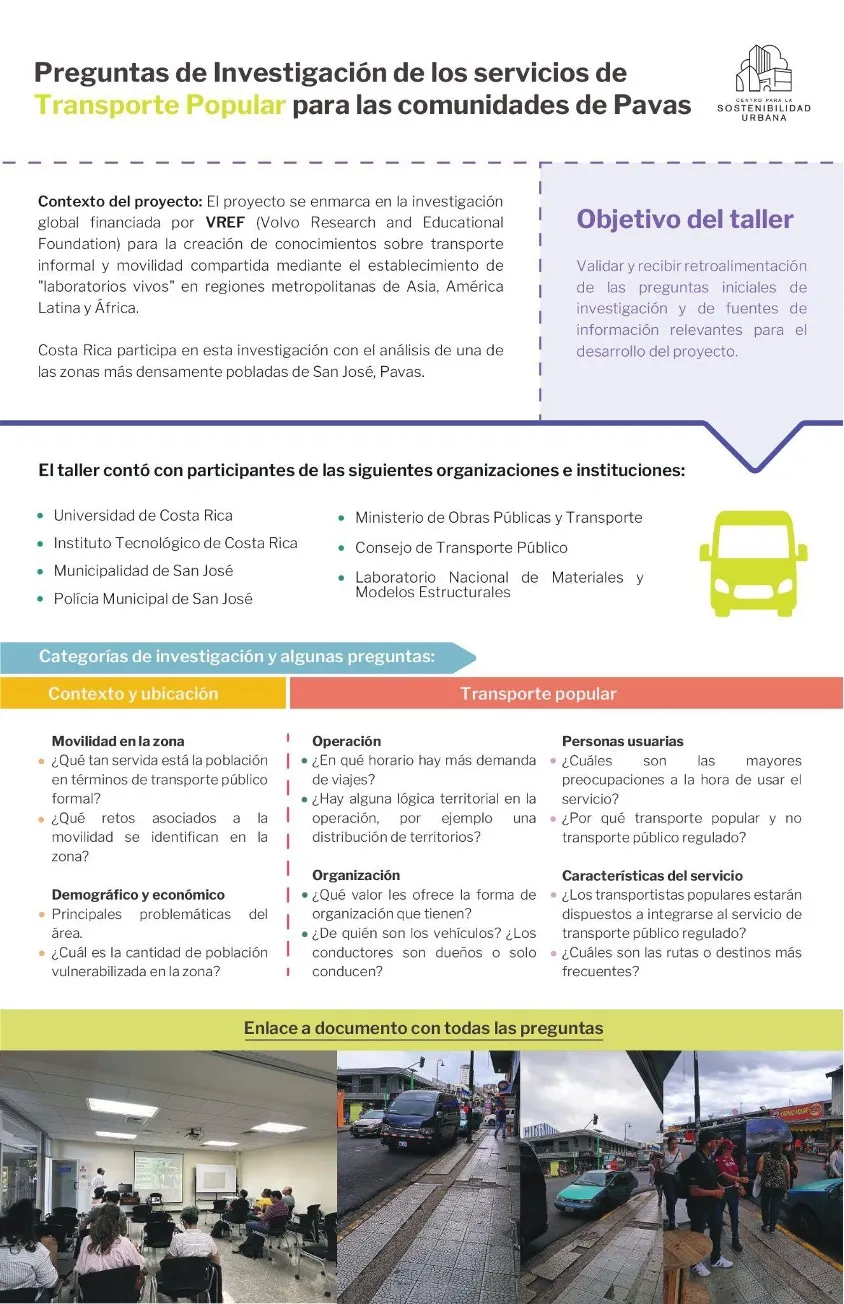
The Metropolitan Area of San José is part of the 4 metropolitan areas in Costa Rica (San José, Heredia, Alajuela and Cartago), characterized by being a main economic, political and cultural center. The district of Pavas is in the western part of San José, with a territorial extension of 9.35 km2 of the 44.62 km2 of the municipality (INEC, 2021).
In 2022, the city of San José reached a population of 352 381 people, of which 52% were women (183 564) and 47.9% were men (168 817). It is the city with the largest population at a national and metropolitan level. In the district of Pavas this figure reaches 83 573 people with 50.3% women and 49.7% men, which makes it the district with the largest population in the city. By 2050, an absolute population growth of between 10,000 and 32,000 people is expected in Pavas (INEC, 2022).
Desk research.
● Popular transport worldwide, in LAC and CR.
● Popular transport in low income communities.
● Legal framework regarding public transport and popular transport.
● Land use and Public Transport routes around the communities served by popular
transportation in the area. Data on km of routes, schedules and frequencies.
● Vehicles identified and seized by police authorities.
● General demographics, and socioeconomic aspects of the area.
Workshops
● With authorities, to define research questions and sources of information.
● With users, and community to understand the role of popular transport in the area.
Field research.
● Observations of how and where the services operate.
● Engagement with operators and users, city government, community and Public
Transport authorities.
● Service usage information (users' perceptions, integration with PT, routes and services, demographics including migrations, social exclusion, types of trips, etc).
● Interviews with counterparts: community leaders, public transport providers, businesses, authorities, municipal police and other local officers, NGOs.
Synthesis of information.
● Written documents such as reports, papers and infographics.
● Audiovisual material.
● University of Costa Rica (UCR)
● TEC University (TEC) *In conversations
PRINCIPAL INVESTIGATOR
RESEARCHERS


NEXT - GENERATION SCHOLARS

Recent Highlights
-The first article was published, titled '“500 to Lomas”: the role of popular transportation in San José, Costa Rica,' which highlights the role and importance of popular transportation in Pavas, providing an alternative means of mobility for historically vulnerable populations such as women, older adults, and children—an aspect of particular relevance for care-related activities. Additionally, the article helps to better understand how this type of transportation operates in Pavas.
- The scientific article was submitted to an academic journal for publication.
- The data collection process was initiated with operators of the popular transportation service, with the aim of writing the second part of the article. This new section will highlight the challenges, needs, and opportunities of the sector from the perspective of those who operate it, as well as provide a deeper understanding of the operational model.
- A visit to the Bogotá Lab was carried out with the aim of exchanging experiences and knowledge about popular transportation in the region, as well as coordinating efforts to conduct a comparative study between both Labs regarding the operation of popular transportation in different contexts
- Communication materials were created and disseminated through the organization’s social media channels. These materials aim to raise awareness among the public about the importance of studying popular transportation in the Costa Rican context, as well as its contributions as a means of transport.
Next on the List
-The comparative study between the Bogotá Lab and the San José Lab regarding the operation of popular transportation in different contexts.
- The publication of the second part of the article, “500 to Lomas”: the role of popular transportation in San José, Costa Rica.
MEDIA GALLERY
Recent News
Recent INTALInC Hallsworth Conference
The International Network for Transport and Accessibility in Low Income Communities (INTALInC) Conference took place from May 19th to 21st, 2026, at the University of Manchester. This year’s conference, Addressing Transport Inequalities in the Global South, held a mix of keynote speeches, workshops and a poster session.
-->
Join us at GloCon 2026 in Bangkok this October!
We are proud to be co-organizers of #GLOCON26 — the first-ever global convening on informal and shared mobility. Researchers, advocates, policymakers, and practitioners come together in Bangkok, 26–28 October.
More info: https://www.informalandsharedmobility.net
Planning With, Not Around, Informal Transport: Lessons From Bogotá | TheCityFix
Check out the new CityFix Blog by By Luis Angel Guzman Garcia, Daniel Oviedo, Juan Esteban Sanchez-Gomez and Paula Guevera Aladino!