Strengthening South–South Learning: PRISM Reports from Ghana
"From Mumbai to Ghana: An Exciting Journey Through the Ghana (Accra - Kumasi) Living Lab Experience!"
A Post-Visit Report from Shreya Baoni
[VREF Next Generation Scholar, Mumbai Living Lab]
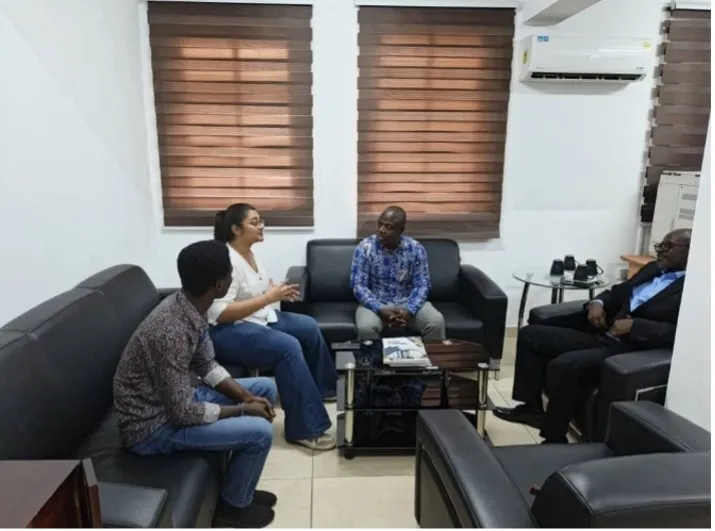
This report presents the outcomes of Shreya's three-week research visit to Ghana University, in Accra, Ghana, funded by Volvo Research and Education Foundation (VREF) under the project “An equity, ecosystems and engaged approach to informal transport and shared mobility” undertaken by Columbia University’s Climate School’s Center for Sustainable Urban Development that built a Global South Consortium called PRISM (Partnership for Research on Informal and Shared Mobility). The purpose of the visit was to strengthen the collaboration between Ghana Living Lab and Mumbai Living Lab and produce comparative research on the operations of three-wheelers in Mumbai and Accra.
During the visit, she engaged in various activities:
- Ghana University – Orientation, presentation and exhibitions conducted by the Department of Geography and Resource Development.
- Field Work – Conducted site visits to the identified “Pragya (Three-wheeler) Station” and identified new stations within the GAMA region.
- Stakeholder Workshop – attended workshop conducted by the Dept of Geography, Ghana University, along with all transport operation leaders of Accra.
- Methodology framework – Initiated discussions to and meetings to form a replicable methodology framework in the context of Accra for mapping the Pragya systems using digital tools.
- Literature Review – Joined Solomon on collecting papers to build a strong literature review for the comparative research paper.
Description of Activities
Onboarding Meeting
The week commenced with a guided tour of the Department of Geography and Resource Development, followed by introductions to the department’s Living Lab, reflecting on the work being undertaken individually.
Key Discussion Points:
- A brief introduction of myself and the ongoing research in the Mumbai Living Lab.
- Reflections from Solomon’s visit to the Mumbai Living Lab, including his experiences and knowledge gained.
- The intent and scope of the collaboration, including:
- A comparative research paper on the operation and spatial analysis of three-wheelers (Pragya) in the Greater Accra Metropolitan Area (GAMA) and Nalasopara within the Mumbai Metropolitan Region (MMR).
- Plans for data collection, identifying required resources and digital tools.
- Support and resources the University of Ghana Department of Geography can provide for data collection and research activities.
- Along with this, an initial brainstorming session was conducted to identify potential activities I could contribute to during my three-week visit.
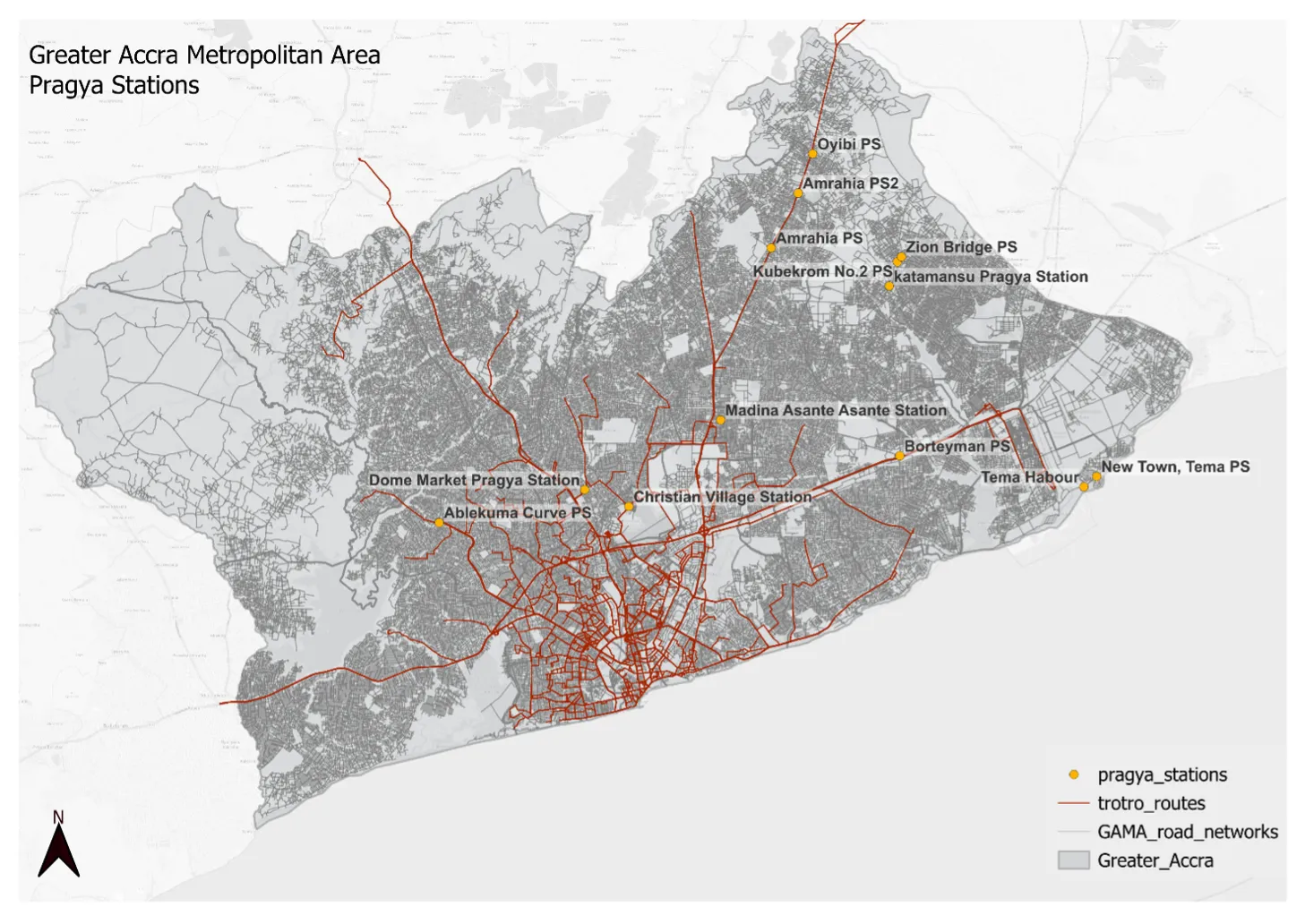
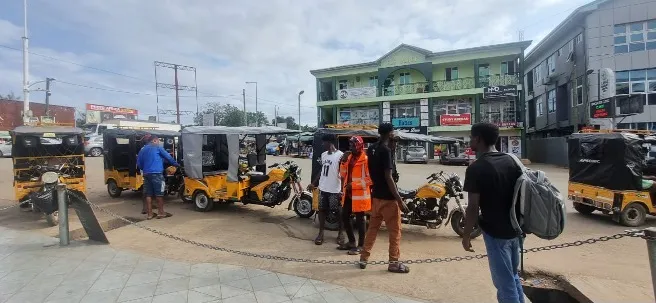
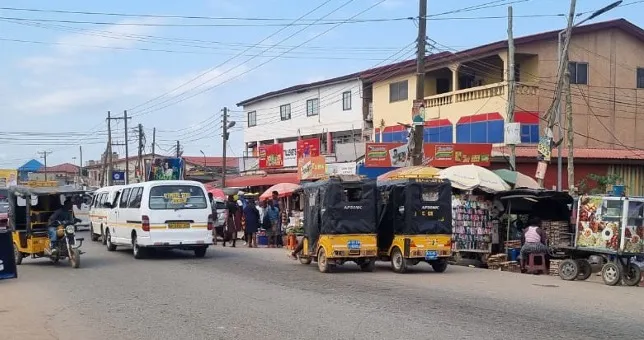
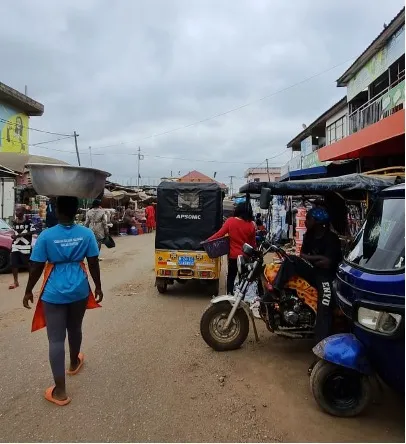
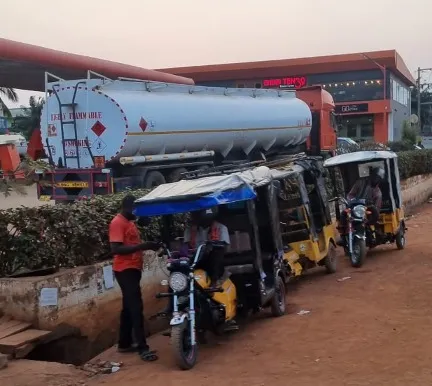
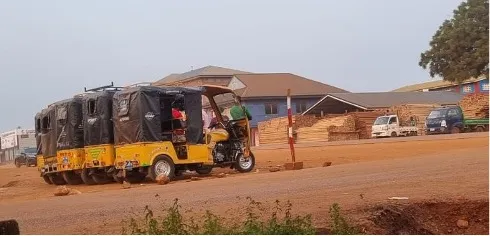
Preliminary Pragya Station Observation
Christian Village
- Union name: One for Love Pragya Union
- Operation method: Shared Operating System — Pillar 2 (4 GHC), Dome Market (4 GHC), St. Jones (3 GHC).
- Notes: This station is located on the side of a junction… they wait to fill in max 4 passengers before they head to the destination.
Dome Market
- Union name: Freedom and Justice Pragya Union
- Operation method: Both Shared Operating System (set routes/fares) and Private Operating System (on-demand).
- Notes: Located in a busy market area… Pragya wait to fill in max 4 passengers before departure.
Madina Market
- Union name: Pragya Union
- Operation method: Private Operating System
- Notes: Located within a market area… heavy goods-oriented trips; last-mile connectivity for goods rather than regular passenger trips.
Katamansu
- Union name: Katamansu Pragya Union
- Operation method: …
- Notes: Located near gas station and paint factory… (industrial edge conditions).
Tema
- Union name: Tema Pragya Association
- Operation method: Shared Operating System — Beach Road (3 GHC), Sweet Mother (3 GHC), Auntie Kate (3.5 GHC).
- Notes: Majorly waits along the roadside… fill in max 4 passengers before heading.
Borteyaman
- Union name: Borteyamen Pragya Transport Station
- Operation method: Primarily Shared Operating System with Private Operating System to School Junction.
- Notes: Co-located with taxis; standard practice to wait for max 4 passengers.
Ablekuma Curve
- Union name: Ablekuma Pragya Association
- Operation method: Shared Operating System — routes Tsoman (5 GHC) and Maheam (5 GHC).
- Notes: Also used as a Trotro stop, with interchange… wait for a minimum of 4 passengers.
Oyibi Junction
- Union name: Oyibi Pragya Union — affiliated with NUTOG (National Union of Tricycle Operators Group)
- Operation method: Shared Operating System — serving Apolonia (5 GHC), Benappat (4 GHC), Estate (4 GHC).
- Notes: Small junction area… wait for minimum of 4 passengers.
Bush Canteen
- Union name: Same union as Oyibi
- Operation method: Private Operating System
- Notes: Newly identified station discovered… along highway; very small fleet.
Image Carousel with 5 slides
A carousel is a rotating set of images. Use the previous and next buttons to change the displayed slide
-
Slide 1: Christian Village Union name: One for love Pragya Union
-
Slide 2: Dåome Market Union Name: Freedom and Justice Pragya Union
-
Slide 3: Madina Market Union Name: Pragya Union
-
Slide 4: Amriaha Union Name: Amriaya Pragya Association
-
Slide 5: Amriaha Tollboth/Christian College Union Name: No union
Exhibition
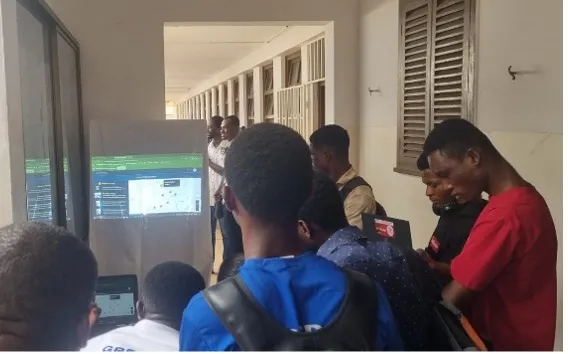
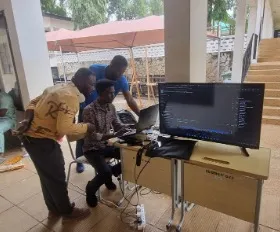
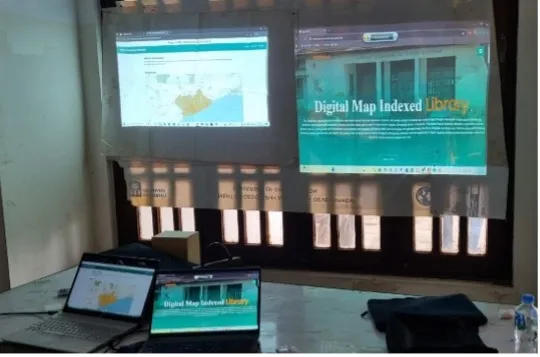
The exhibition offered a valuable opportunity to observe how digital tools could be applied to the study of informal mobility systems.
(Web) Key Takeaways:
- Digital Tool Learning: The Mumbai Living Lab has been developing a web map to narrate the autorickshaw ecosystem—its role in first- and last-mile connectivity, route organization, profitability, and impacts on local livelihoods. Observing the Ghana exhibition broadened my understanding of how web-based mobile apps and digital libraries could further enrich our work in Mumbai.
- Peer Interaction: Engaging with a diverse group of graduating students opened avenues for collaboration and comparative research, particularly on shared challenges and opportunities across cities.
Image Carousel with 3 slides
A carousel is a rotating set of images. Use the previous and next buttons to change the displayed slide
-
Slide 1: Web Exhibition & Tooling — Learning exchange on digital mapping, data libraries, and visualization approaches.
-
Slide 2: Students, along with Solomon, presented a wide array of projects.
-
Slide 3: The exhibition offered a valuable opportunity to observe how digital innovations can be harnessed for practical problem-solving
Stakeholder Workshop
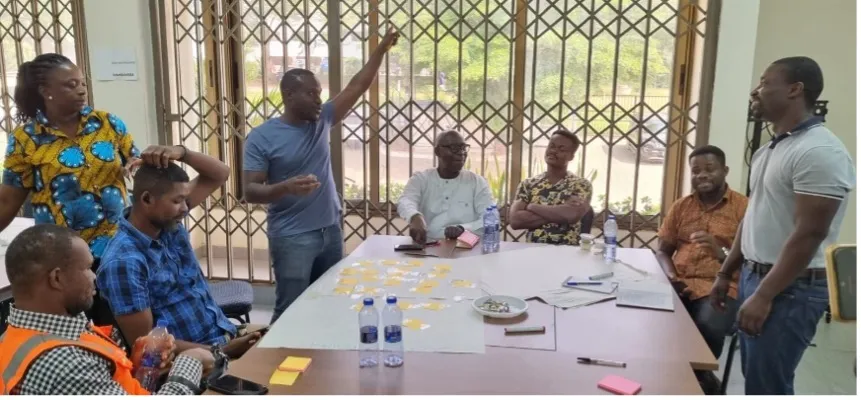
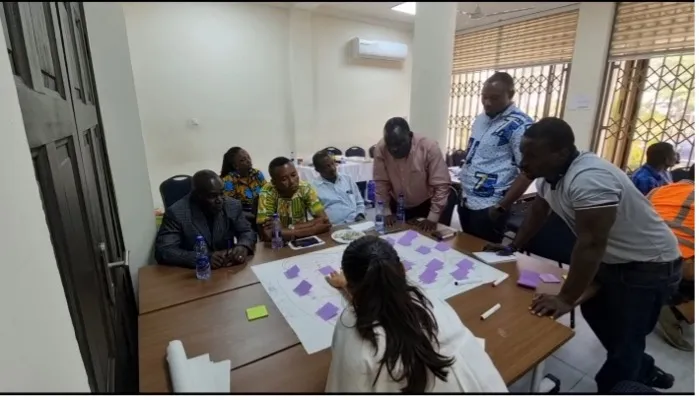
The Ghana Living Lab conducted a Stakeholder Workshop… assessment of the transport ecosystem in Ghana’s major cities.
The final workshop format was divided into three “Acts”… designed to structure reflection and reveal different dimensions of stakeholder perspectives.
- Act 1: the attending leaders were divided into… groups to map realities, rules, and bottlenecks; used color-coded sticky notes to highlight points of alignment or conflict across operators.
- Act 3: The mixed groups were later tasked with… identifying opportunities and the underlying causes of fragmentation in the transport system.
- Final broader reflections on what an integrated system could look like not only at the city or regional level but also at the scale of the entire country.
The workshop was later replicated in Kumasi, yielding… materials for comparison; the team is analyzing AI tools as part of a larger Ghana Living Lab study.
Image Carousel with 2 slides
A carousel is a rotating set of images. Use the previous and next buttons to change the displayed slide
-
Slide 1: Stakeholder Workshop (Accra) — Operator leaders mapping current practices, constraints, and improvements.
-
Slide 2: Stakeholder Workshop (Kumasi) — Replication session to test methodology in a second city
Faculty Meeting
Having the opportunity to present the work Mumbai Living Lab… methods and the survey questionnaire prepared for data collection in Mumbai.
This allowed an engaging discussion on how such methodologies could be adapted… and aligned for the comparative study, laying the groundwork for a collaborative paper.
Key Outcomes from the Meeting:
- Methodology:
- For large-scale data collection in Accra, Kobo Collect was identified as the primary tool, given its
familiarity among peers who will be engaged as volunteer data collectors.. - A comprehensive survey will be designed to capture operational modes (shared vs private), fares, trip purposes, spatial distribution, and business models of the Pragya system.
- OSM Tracker will be used to map shared routes and geolocate private trips.
- Data will be hosted on the Department’s ArcGIS environment (ArcGIS Online)… with both ArcGIS and QGIS supporting subsequent spatial analysis.
- For large-scale data collection in Accra, Kobo Collect was identified as the primary tool, given its
- Future Plan:
- Completion of a literature review, co-developed survey instruments, and ethical review submissions—reviewed by Professor Ernest, Professor Ransford, and Aneerudha Paul.
- Finalization of the survey questionnaire, building on Mumbai Living Lab templates and adapted to the Pragya system, in consultation with the Ghana Living Lab team.
- Data collection in Accra will be led by Solomon, with local student teams ensuring local contextualization and execution of the methodology.
- Exit Meeting … (agreed next steps and coordination cadence).
Methodology Framework (Set-Up & Next Steps)
- Initiated discussions and meetings to form a replicable methodology framework in the context of Accra for mapping the Pragya systems using digital tools.
- Data capture will cover operating modes, fares, trip purposes, spatial distribution, station typologies, and governance/union structures.
- Digital tools: OSM Tracker for route/trip capture; ArcGIS/QGIS for storage, cleaning, spatial analysis, and visualization.
- Comparability: Instruments and coding scheme aligned with Mumbai Living Lab to enable Accra–Mumbai comparative analysis.
Photo: Digital Methods in Practice — OSM Tracker workflow; ArcGIS data structure for shared/private trip layers.
Future Action Plan
Building on the outcomes of the visit and collaborative work, the teams will coordinate to complete the literature review, finalize instruments, secure ethics approval, and launch field data collection in Accra. Data structures and variable definitions will mirror Mumbai’s, enabling comparative analysis across India and Ghana. In the longer term, the project aims to leverage these insights to inform inclusive transport planning in rapidly growing urban regions and to generate joint publications and practitioner toolkits.
Reflections on Personal and Professional Development
This visit significantly enhanced my capacity as a researcher in three key dimensions.
- Collaborative: I had the opportunity to engage with peers and faculty in Ghana, strengthening the scope and ambition of our shared work.
- Cross-cultural: The experience deepened my understanding of Accra’s transport ecosystem and highlighted both the parallels and differences with the Indian context.
- Methodological: The fieldwork and workshops provided valuable feedback on our instruments and approach, sharpening our strategy for structuring collaborative research across diverse urban settings.
Acknowledgments
I extend my sincere gratitude to VREF for making this visit possible, to the Department of Geography and Resource Development at the University of Ghana for their generous support, and to all operators, union representatives, and workshop participants who shared their time and insights. I am grateful to the Mumbai Living Lab/PRISM colleagues and mentors for their continued guidance, and to Solomon, Kobby, Professor Ernest, Professor Ransford, and Aneerudha Paul for their leadership and collaboration. Special thanks to the many students who contributed to data collection, field observations, and logistics.